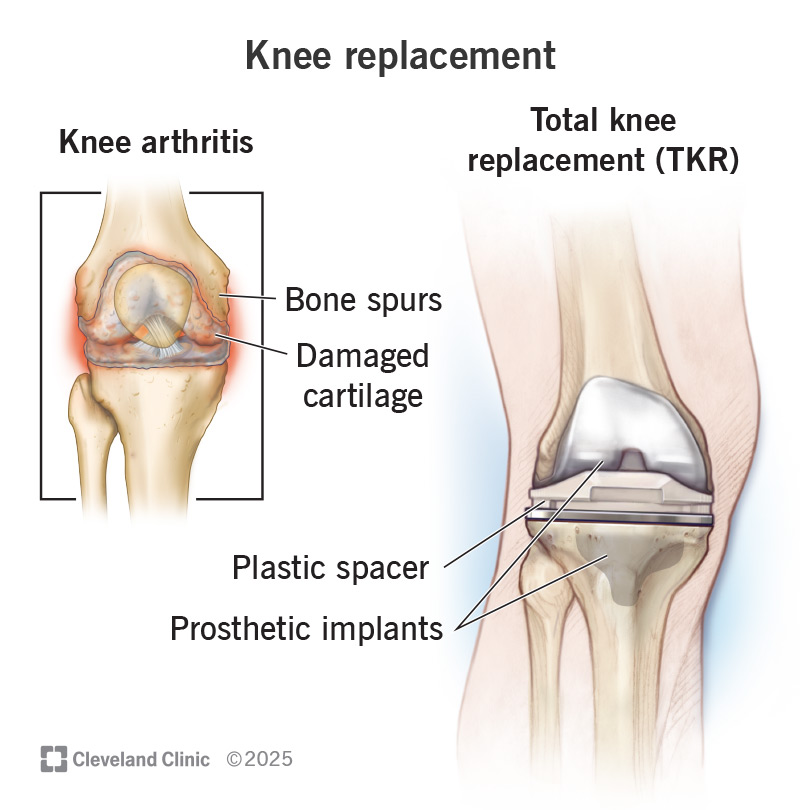
- Total Knee Replacement (TKR)
The entire knee joint is replaced with artificial components to restore full joint function.
Only the damaged portion of the knee is replaced, preserving healthy bone and tissue.
- Revision Knee Replacement
Performed when a previous knee replacement implant fails or wears out.
- Bilateral Knee Replacement
Performed when a previous knee replacement implant fails or wears out.
Advance Surgical Techniques Used
Minimally invasive knee replacement
Computer-assisted and precision-guided surgery
Muscle-sparing approaches
Rapid recovery protocols
Enhanced pain management techniques
These advanced methods ensure less pain, minimal scarring, and faster mobility after surgery.
The knee Replacement Procedure: Step-by-Step
1. Pre-Surgery Evaluation
Clinical examination, imaging tests, and medical fitness assessment.
2. Surgical Procedure
The damaged knee joint surfaces are replaced with durable implants.
3. Post-Surgery Monitoring
Pain management and early mobilization under expert supervision.
4. Physiotherapy & Rehabilitation
Guided exercises to restore strength, flexibility, and movement.
Recovery & Rehabilitation
Most patients begin walking within 24–48 hours after surgery with support. A structured physiotherapy program is essential for optimal recovery.
Recovery timeline may include:
Hospital stay: 3–5 days
Assisted walking: within a few days
Resuming daily activities: 4–6 weeks
Full recovery: 3–6 months
Benefits of Knee Replacement Surgery
Significant pain relief
Improved mobility and joint function
Better posture and walking ability
Enhanced quality of life
Long-lasting results with modern implants
Success Rate & Outcomes
Knee replacement surgery has a success rate of over 95% when performed by experienced surgeons using advanced techniques.
Cost of Knee Replacement Surgery
The cost of knee replacement depends on:
Type of surgery (partial or total)
Implant selection
Hospital stay and rehabilitation needs
Patient’s medical condition
For a personalized cost estimate, our team provides transparent consultation and guidance.
Frequently Asked Questions (FAQs)
Is knee replacement surgery safe?
Yes, it is a well-established and safe procedure when performed by experienced orthopedic surgeons.
How long does the surgery take?
Typically, 1–2 hours, depending on the complexity.
Will i be able to walk normally again?
Yes, most patients return to normal walking and daily activities with proper rehabilitation.